
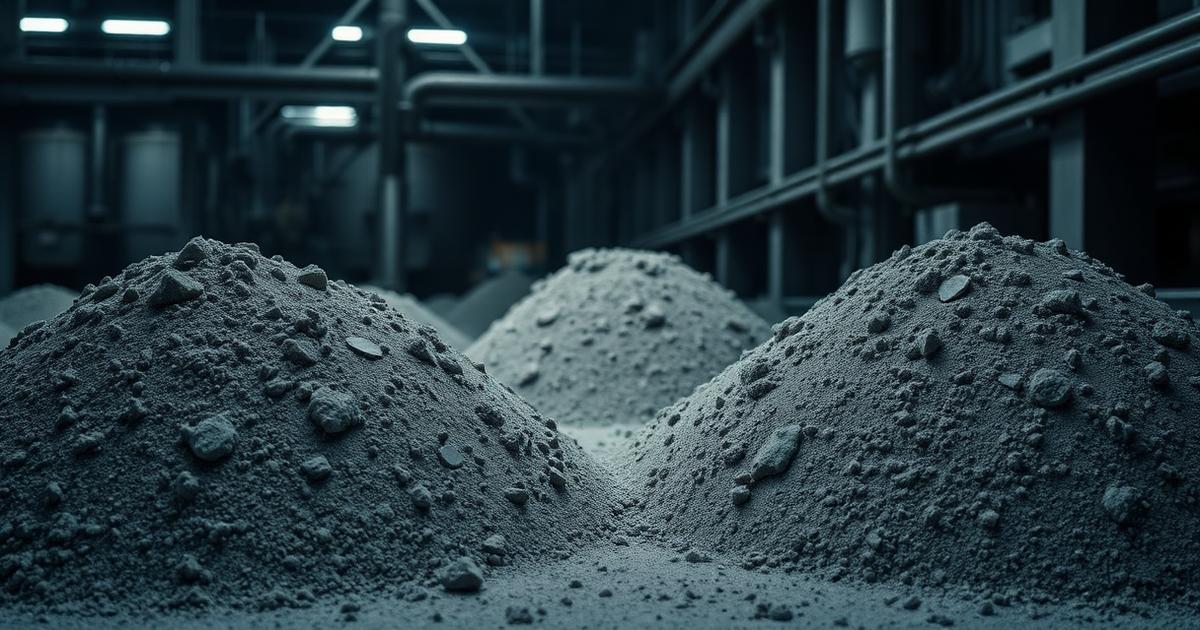
Cement bypass dust, also called cement kiln dust (CKD) or chlorine bypass dust (CBD), is one of the most under-discussed byproducts of modern cement manufacturing. It is not the finished cement powder that fills bags and trucks; it is the fine, reactive material removed from the kiln circuit specifically because it is too rich in chlorides, alkalis, and heavy metals to be recycled back into clinker. Every dry-process cement plant that runs a bypass loop produces it, and the volumes are substantial. For decades the industry treated bypass dust as an unavoidable disposal cost. That view is now changing, driven by tighter regulation, rising landfill costs, and technologies that can extract value from the same material.
What Is Cement Bypass Dust?
Bypass dust is the solid material captured when a portion of hot kiln gases is diverted and cooled before entering the preheater. Because this diverted stream is drawn from the point in the kiln system where volatile compounds are most concentrated, the dust carries a much higher load of chlorides, sulphates, potassium, sodium, and trace heavy metals than ordinary cement raw meal or clinker. It is typically fine, alkaline, hygroscopic, and chemically reactive. Left exposed to moisture, it can harden or form lumps. Its high pH and soluble salt content mean it cannot simply be blended back into the cement mill in large proportions without affecting product quality, setting behaviour, and long-term durability. In most plants it is therefore kept separate from the product stream and handled as a distinct waste material.
Why It Is Classified as Hazardous Waste
The hazardous classification of bypass dust comes from its chemistry, not its physical form. The soluble chloride content can leach into rainwater if the dust is stored or disposed of in unlined conditions, raising salinity and potentially affecting soil and groundwater. The alkali load makes it corrosive and reactive. Trace heavy metals — including lead, cadmium, and chromium — are present at levels that require careful management under hazardous-waste rules. In India, bypass dust falls under the regulatory framework for industrial hazardous waste, meaning its storage, transport, treatment, and disposal must follow CPCB and state pollution control board norms. The classification is not a formality; it determines everything from the type of landfill that can accept the material to the record-keeping and liability a plant faces.
The Disposal Dilemma
Historically, cement plants have disposed of bypass dust in hazardous-waste landfills, used it in low-value applications such as mine backfilling or soil stabilisation, or blended small quantities into clinker under carefully controlled limits. All of these routes are becoming harder. Landfill capacity for hazardous industrial waste is limited in many states, and tipping fees have risen steadily. Transporting dust over long distances adds cost and emissions. Blending is restricted by quality standards because too much chloride or alkali in finished cement can cause reinforcement corrosion and durability problems in concrete. As environmental enforcement tightens and public scrutiny increases, the old disposal playbook is losing its economic and social licence. Plants that continue to rely on it are exposed to both cost inflation and reputational risk.
The Circular Opportunity
The same chemical composition that makes bypass dust difficult to dispose of also makes it a potential feedstock. The soluble chlorides are predominantly potassium and sodium salts; with the right process, potassium can be recovered as potassium chloride (KCl), a globally traded fertilizer commodity. The residual calcium-rich solid, once the chlorides and heavy metals have been removed, can be returned to the cement kiln as a raw material substitute. This is the principle behind the Anytech Hughes CCU & CCS process: rather than managing bypass dust as a waste, it is processed as an ore. The result is a dramatic reduction in the volume sent to landfill, a new revenue stream, and a lower net raw-material demand. Read the CCU & CCS technology overview for a step-by-step explanation of the process.
Regulatory Pressure in India
India's cement sector is governed by a layered set of rules: Environmental Impact Assessment notifications, consent conditions issued by State Pollution Control Boards, hazardous-waste management rules, and increasingly, ESG disclosure expectations from lenders and investors. CPCB has been tightening particulate emission norms and pushing for better tracking of industrial byproducts. The direction is clear: waste streams that were once accepted as routine will need to be minimised, documented, and preferably valorised. Plants that proactively adopt circular processing are better placed to secure consents, participate in green financing, and maintain their social licence to operate in communities near their facilities. Waiting for a regulatory deadline often means paying a premium for technology and offtake agreements later.
Turning Liability into Asset
The financial case for circular bypass-dust processing rests on three pillars. First, avoided cost: every tonne not sent to landfill saves transport, tipping, and compliance expense. Second, revenue: recovered KCl can be sold into fertilizer or industrial markets, with pricing linked to the broader potash market. Third, balance-sheet risk reduction: a plant with a documented, low-waste process is a more attractive borrower, joint-venture partner, and acquisition target. The shift from liability to asset is not automatic — it requires process integration, offtake arrangements, and sometimes a change in accounting — but the underlying economics are robust for plants with consistent bypass dust volumes. For many Indian cement producers, bypass dust is no longer just an environmental problem; it is an unexploited resource.
From Lab Validation to Commercial Scale
Moving a chemical process from the laboratory to a commercial cement plant is where many promising technologies fail. Kiln dust is not a uniform feedstock: chloride content varies with the fuel mix and raw materials, particle size distribution changes with kiln operation, and heavy-metal concentrations shift from batch to batch. A viable CCU & CCS process must therefore be validated across a representative range of dust samples before design freeze. The next step is a pilot or demonstration unit operating continuously for enough run-hours to prove reliability, measure actual KCl yield and purity, and confirm residue quality. Only after the pilot data matches the design model does it make sense to scale to a full commercial train. The modular design of the Anytech Hughes system allows this scale-up to happen in stages: a plant can start with a smaller processing line, prove the economics, and then add capacity as bypass dust volumes grow. This staged approach reduces risk, preserves capital, and gives operations teams time to learn the process before committing to the full installation. It also means the business case is refreshed with real data at each gate, which is exactly what finance committees and lenders prefer to see.
The Regulatory Trajectory in India
Indian cement producers operate under a tightening framework of hazardous waste, air quality, and corporate sustainability rules. The Central Pollution Control Board and state pollution control boards are increasingly focused on the entire lifecycle of industrial byproducts, including storage, transport, treatment, and disposal. Cement bypass dust, because of its chloride and heavy-metal content, falls into a category that demands careful handling and documentation. Plants that continue to landfill large volumes face not only rising costs but also greater scrutiny during consent renewals, environmental audits, and lender due diligence. At the same time, policy signals are encouraging recovery and reuse: import substitution for fertiliser raw materials, circular-economy initiatives, and green credit mechanisms all create room for projects that convert waste into products. A well-structured CCU & CCS project can therefore be positioned as both a compliance solution and a strategic resource-security play, which makes it easier to justify internally and to finance externally.
Frequently Asked Questions
What is cement bypass dust?
Cement bypass dust is the fine, reactive material captured when kiln gases are diverted to remove volatile compounds. It is rich in chlorides, alkalis, and trace heavy metals.
Why is bypass dust hazardous?
Its high soluble chloride and alkali content, combined with trace heavy metals, can leach into water and corrode materials if not properly contained, which is why it is regulated as hazardous waste.
Can bypass dust be recycled into cement?
Only in very small, controlled amounts. High chloride and alkali levels limit how much can be returned to clinker without affecting quality and durability.
What is the circular alternative?
CCU & CCS technology leaches the soluble salts, recovers potassium chloride, removes heavy metals, and returns a cleaner calcium-rich residue to cement production.
Does circular processing reduce regulatory risk?
Yes. Reducing hazardous waste volumes, improving documentation, and creating a valorised product stream all strengthen a plant's regulatory and ESG position.
Related Articles
What is a Chlorine Bypass System (CCU & CCS) in Cement Plants?
A technical introduction to Chlorine Bypass Systems: why cement kilns need them, how they work, and how they turn a hazardous waste stream into value.
Read moreConverting Cement Bypass Dust into Potassium Chloride (KCl)
The chemistry, process steps, and economics behind turning cement bypass dust into high-purity potassium chloride.
Read moreCircular Economy in the Cement Industry: Turning Waste into Value
How circular economy principles apply to cement manufacturing — and how CCU & CCS technology turns waste streams into revenue streams.
Read moreWant to discuss your specific requirements?
Our team can help assess and tailor a solution for your organization.
Explore Carbon Capture