
The dust your kiln already separates out.
Cement plants burning alternative fuels accumulate chlorine. The Chlorine Bypass System strips it out and leaves a chloride-rich dust that is a regulated waste. That dust is the highest-value feedstock this process takes.
Chlorine is the ceiling on alternative fuel.
Burning waste-derived fuel introduces chlorine, which volatilises in the kiln and recondenses in the preheater, forming rings and blockages. Above roughly 0.5% the plant loses stability.
The Chlorine Bypass System exists to bleed that chlorine out. It works, but it produces a dust concentrated in chlorides, alkalis and heavy metals — lead, cadmium and thallium — that must be handled as a regulated waste.
So the plant faces a choice between capping its alternative fuel rate and carrying a growing disposal liability. Neither is free.
What is actually in the dust.
- Chlorine
- 30.6%
- Potassium oxide
- 16.8%
- Calcium oxide
- 38.5%
X-ray fluorescence spectrometry. Analysis by Kongju National University, South Korea.
The chlorine and potassium are what make potassium chloride recoverable. The calcium oxide is what reacts with CO₂. The composition that makes this dust a disposal problem is the same composition that makes it a feedstock.
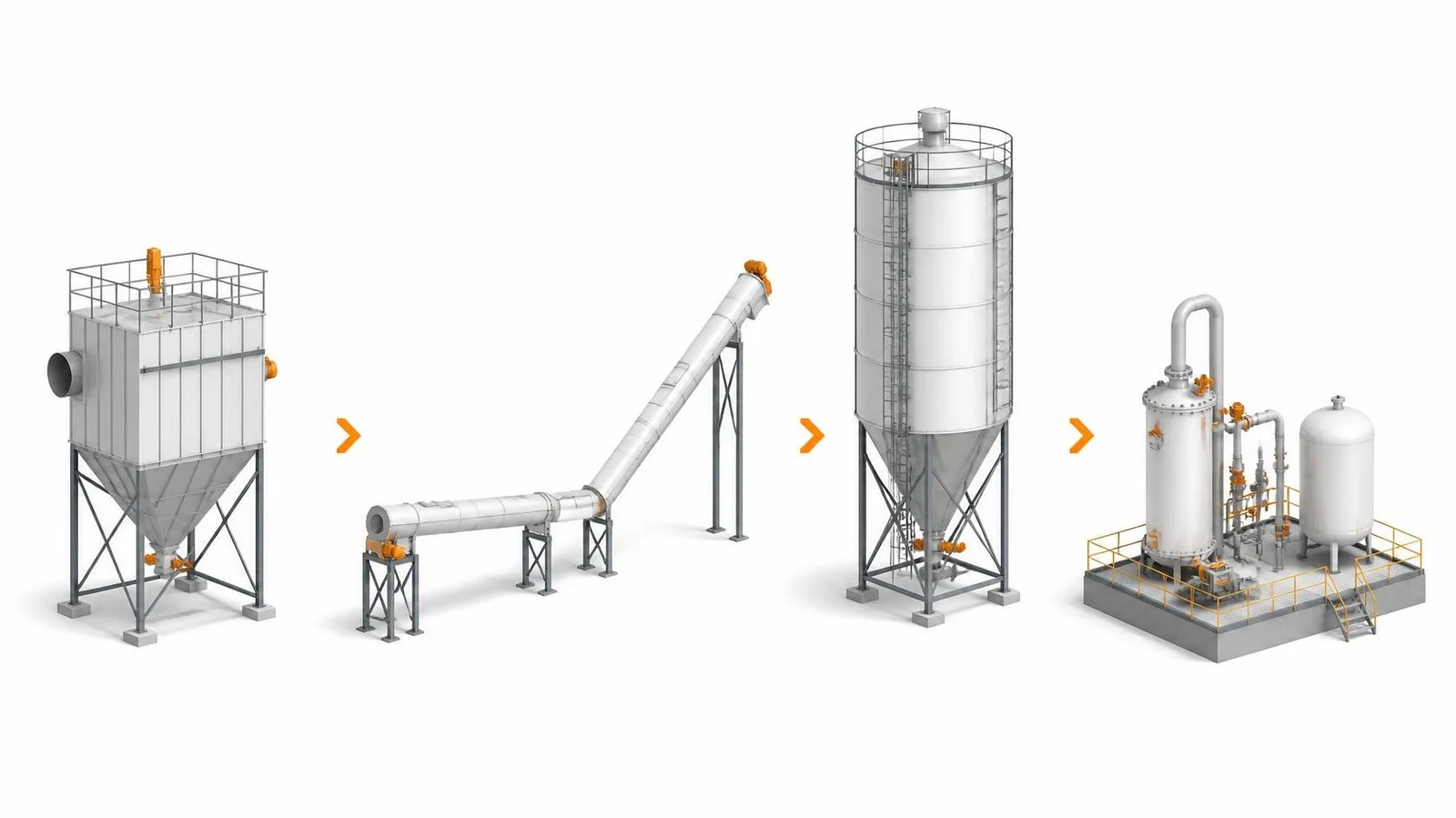
How the conversion works.
Source — ANYTECH Co., Ltd process documentation
Two products and no residue.
Potassium chloride, ~95% as standard
Fertiliser-grade KCl at about 95% as standard, and up to 99% on customer request. India imports effectively all of its potassium chloride requirement.
Calcium carbonate
Returned to the kiln as a raw material, displacing quarried limestone.
The CO₂ that drove the reaction stays bound in the carbonate.
Why Indian cement plants are moving now.
- Cement entities under CCTS 2025
- ~490Legally required to reduce emission intensity
- Alternative fuel mandate
- 15% RDF by 2031Ministry of Environment rule for cement kilns
- India thermal substitution rate
- 3–5%Compared with 30–40% in Europe
- Installed Indian cement capacity
- >660 MtpaCompany Profile 2026
Indian regulatory and market context. Figures as published by the relevant authorities.
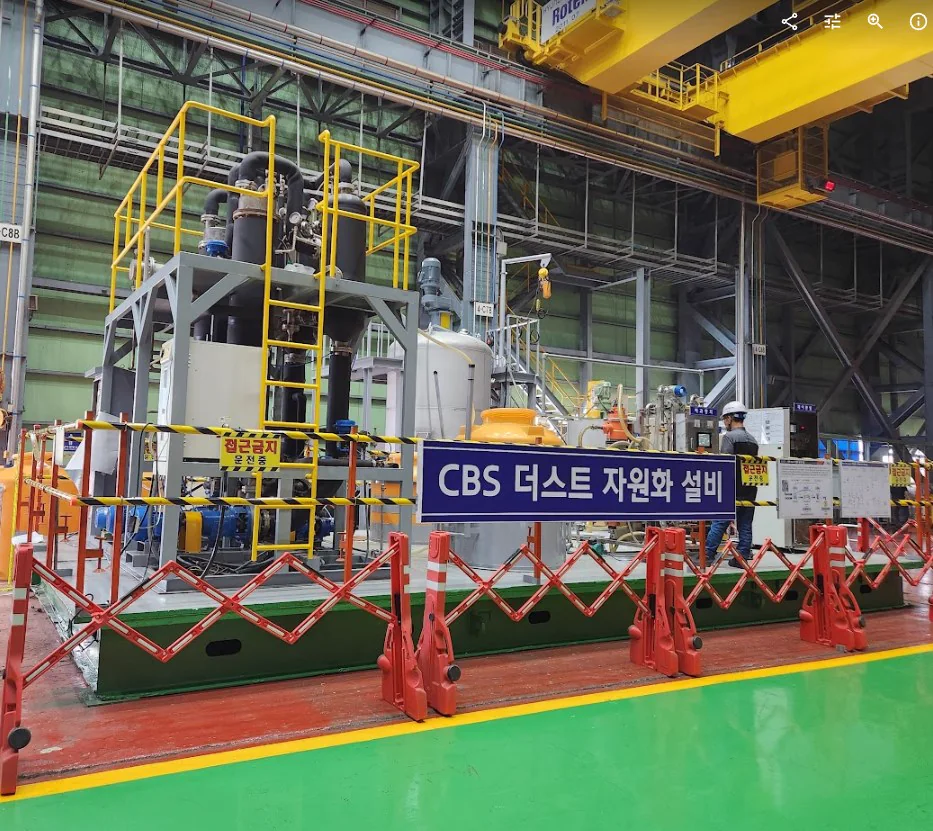
A full-scale plant in operation at Hanil Cement.
Hanil Cement, Anytech, and Hyundai Rotem have jointly built and are operating a full-scale plant that treats CBS dust. High-purity KCl production has been verified jointly with UNID.
Full-scale commercial facility designs have been completed for 10,000 and 20,000 tonnes per year of CBS dust, including the equipment list, plant layout and plot plan.
The core process technology is developed and owned by ANYTECH Co., Ltd in the Republic of Korea, and delivered to Indian sites by Anytech Hughes Climate Solutions Pvt. Ltd.
Send us your bypass dust analysis.
With a composition and your kiln data we will model capacity, output and the configuration that fits your plant.