
Ash on the ground. CO₂ up the stack.
Power stations and refineries sit beside large volumes of fly ash and vent CO₂ continuously. Combined and cured, the two produce building material — and the carbon stays in the product.
Two liabilities that cancel each other.
Fly ash accumulates faster than most sites can dispose of it. It is stockpiled in ponds and mounds, occupies land, and carries handling and compliance obligations that grow with the pile.
Flue gas leaves the same site continuously, and increasingly carries a compliance cost of its own as carbon markets take effect.
Brought together under the right conditions, the CO₂ reacts with the calcium and magnesium oxides in the ash. The gas is bound into a solid carbonate and the ash becomes a formed building product. Neither is a waste at the end of it.
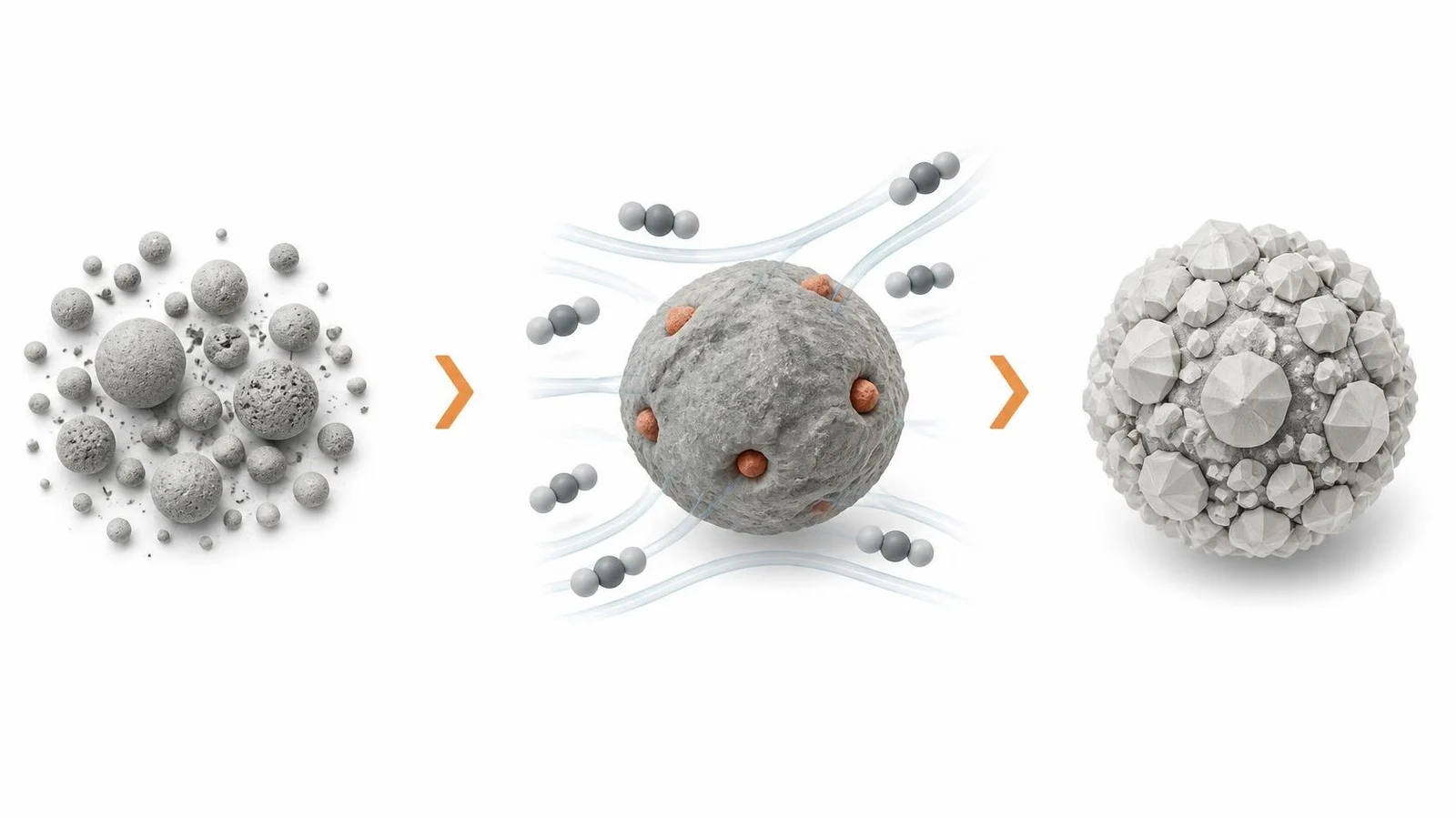
What makes ash reactive.
- Calcium oxide
- CaOReacts with CO₂ to form calcium carbonate
- Magnesium oxide
- MgOAlso carbonates, contributing to strength
- Silica
- SiO2Structural component of the finished unit
- Alumina
- Al2O3Structural component of the finished unit
Calcium and magnesium oxides are what carbonate. The higher their share, the more CO₂ a given tonnage of ash will take up — which is why a composition analysis is the first thing we ask for.
From stack to finished unit.
Source — ANYTECH Co., Ltd process documentation
Why this pairing works.
Why bricks
India's brick demand is very large. Conventional clay bricks consume topsoil and are fired with coal. CO₂-cured bricks are hardened rather than fired, so no kiln and no combustion is involved in curing them.
Why fly ash
It is already stockpiled in volume beside the plants that generate it, at almost no cost. Short transport distance keeps the logistics cost of the feedstock low.
Why the plant is simple
A mixer, a press and a curing chamber. No high-temperature or high-pressure stage, which holds down both the capital cost and the operating cost.
What we would need from you.
A fly ash composition analysis. Flue gas composition and flow data for the stream under consideration. An indication of available ash tonnage. And the site's own view on whether it wants a pilot or a commercial-scale installation.
Ash availability determines how much of a given flue gas stream can be treated, so sizing starts there rather than with the gas.
Send us an ash analysis.
With a composition and your stack gas data we will tell you what the reaction would yield and what a plant on your site would look like.