
Deployed at scale
across India.
Sector-specific air purification deployments for public, healthcare, industrial, and smart city programs.
Air quality as infrastructure, not equipment
Public sector and multi-site enterprise projects fail for different reasons than single-room installations do. The equipment is rarely the hard part; the hard part is sizing it against a defensible target, installing it across sites that were never designed for it, proving after commissioning that it works, and keeping it working through years of filter cycles and staff turnover.
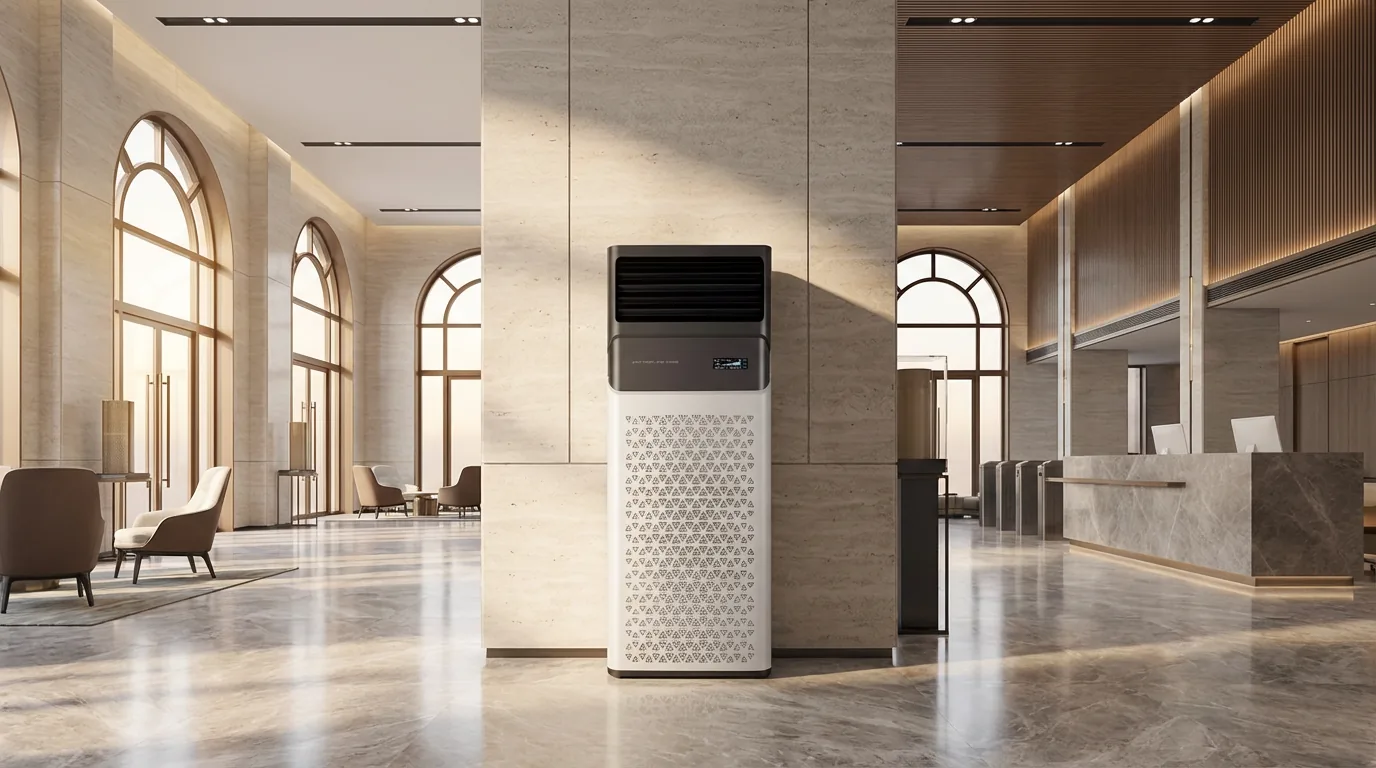
Sizing starts with measurement rather than floor area. A site survey establishes the ambient load and the air-change target for each zone — typically 4–6 air changes per hour for offices and 6–12 for clinical areas. An indoor unit covers up to 5,000+ sq. ft. of open plate, so larger facilities are served by coordinated configurations rather than a single oversized machine. Where the pollution source sits outside the building envelope, an outdoor smog tower treats the ambient micro-environment directly.
Verification is where most programmes fall short. Continuous monitoring is specified as part of the deployment, not as an optional extra: calibrated sensors log PM2.5, PM10, CO₂, VOC, temperature and humidity, dashboards show zone-level AQI trends in real time, and compliance reports are generated from the stored record.
Deployment Use Cases
Sector-specific solutions with proven outcomes.
Institutional Engagement
Proposals submitted and engagements in progress with public institutions.
Government of Odisha
Proposal submitted · February 2026
Proposal forwarded by the Joint Secretary (Forest, Environment & Climate Change Department) to the State Pollution Control Board for review.
Indian Armed Forces
Engagement in progress
Company introduction submitted to the Directorate of Mechanical Transport (Air HQ) and ESP Directorate for indoor air purification systems.
Municipal Corporation of Bhavnagar, Gujarat
Proposal submitted · March 2026
Presentation request submitted for advanced air quality and pollution control solutions.

Government & Public Infrastructure
Air purification and monitoring solutions for government departments and public infrastructure projects.
Key Outcomes

Healthcare Institutions
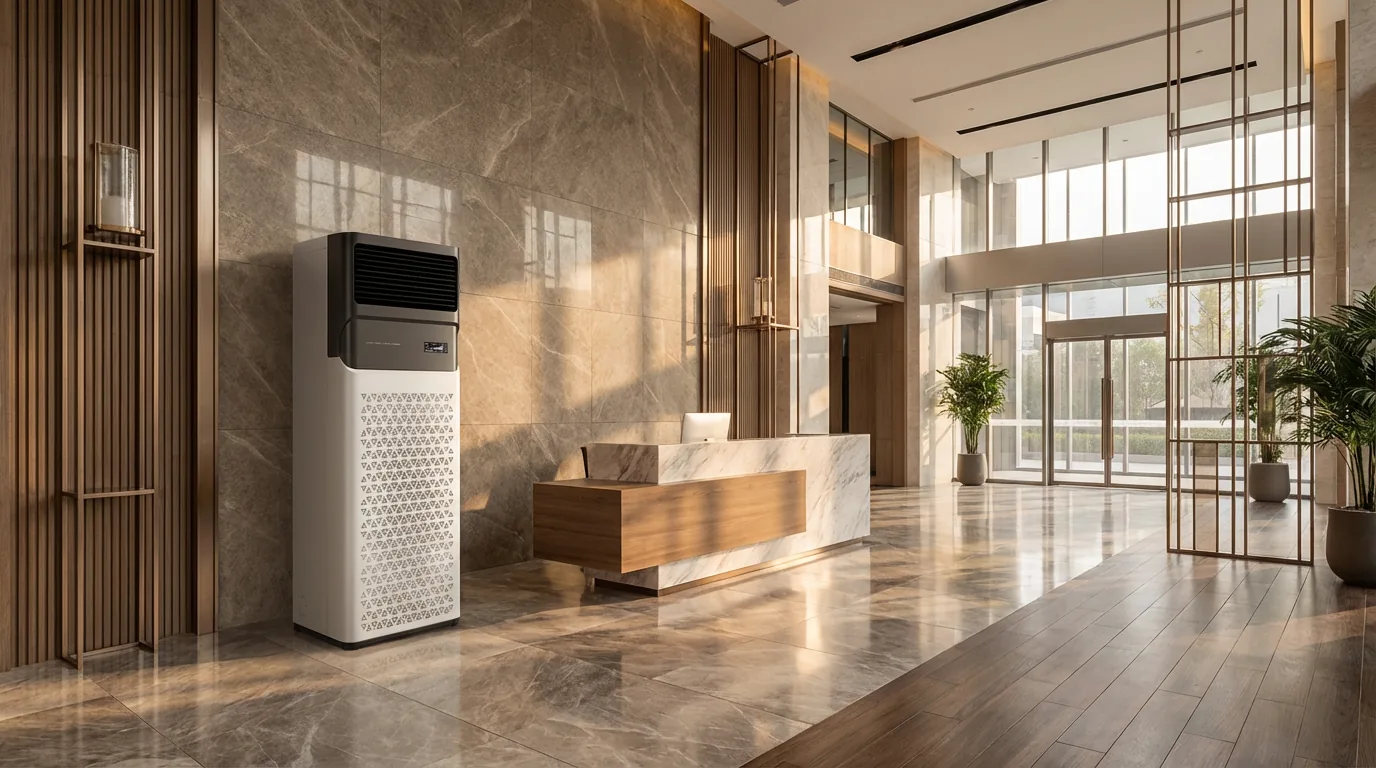
Indoor air purification solutions for hospitals and healthcare facilities.
Key Outcomes
Industrial Applications
Air purification systems for industrial environments and operational spaces.
Key Outcomes

Smart Cities & Public Spaces
Integrated air purification and monitoring for smart city infrastructure and urban public spaces.
Key Outcomes
Deployment Process
End-to-end deployment support from initial consultation to full-scale rollout.
Consultation
Site assessment and requirement analysis for optimal deployment.
Pilot
Demonstration and pilot project to validate performance.
Installation
Turnkey implementation with full installation support.
Rollout
Large-scale deployment and ongoing maintenance.
Consultation
Site assessment and requirement analysis for optimal deployment.
Pilot
Demonstration and pilot project to validate performance.
Installation
Turnkey implementation with full installation support.
Rollout
Large-scale deployment and ongoing maintenance.
Deployment Model
Service and lifecycle support
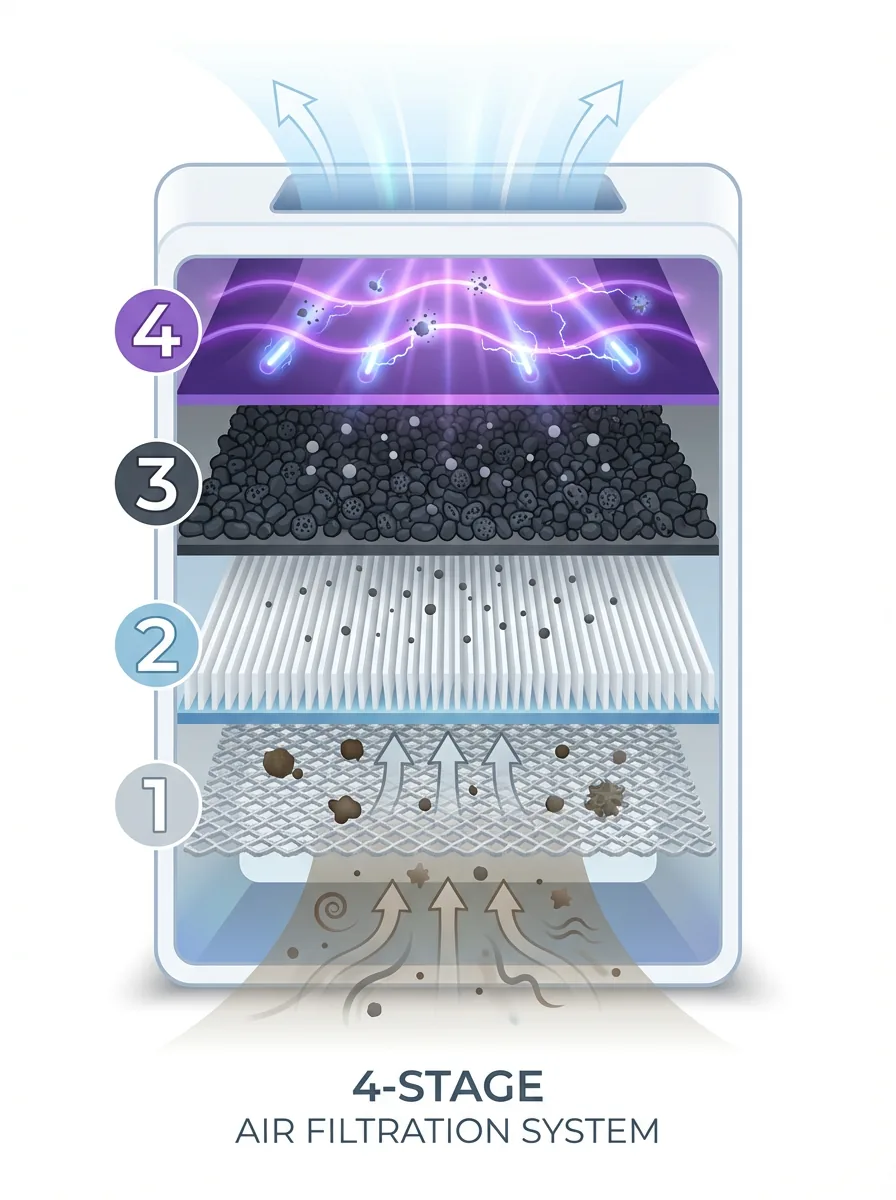
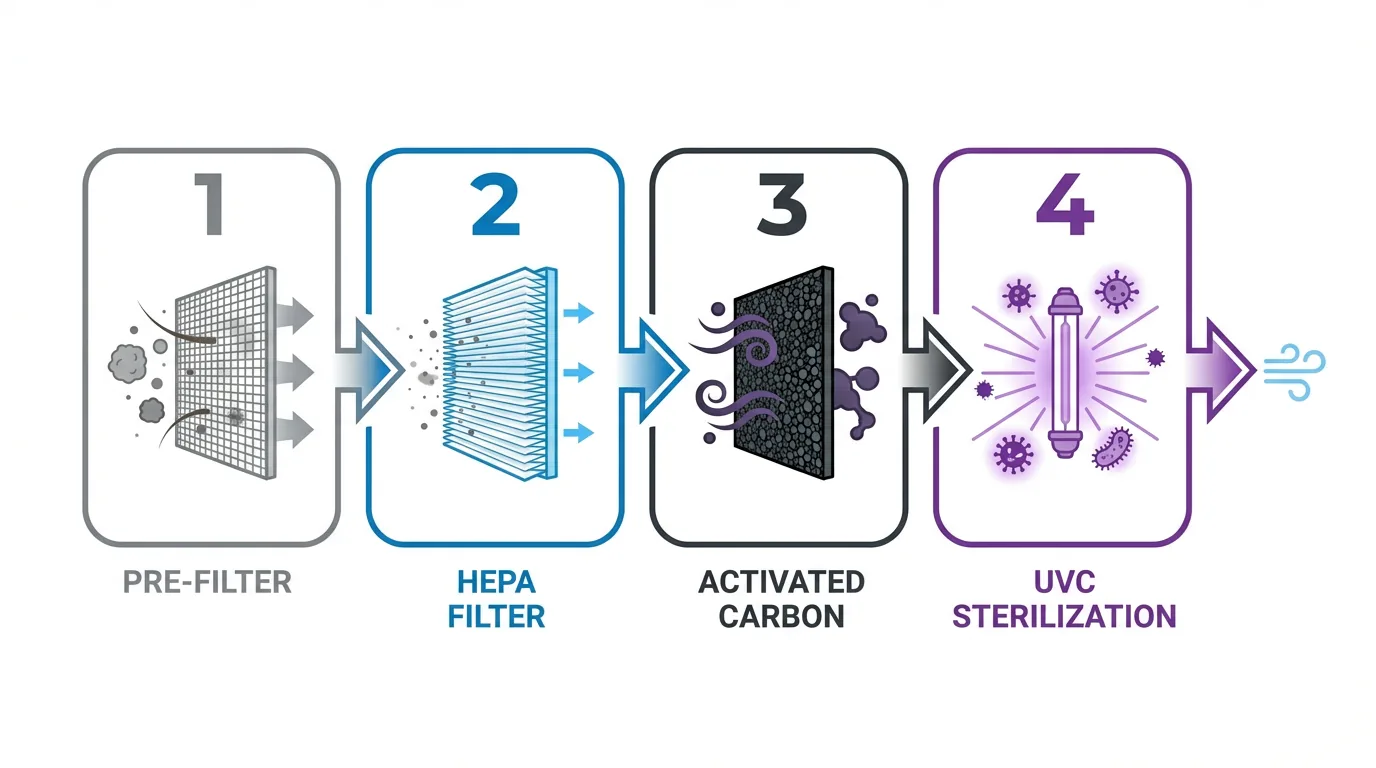
Filtration performance decays predictably, so servicing is scheduled rather than reactive. Pre-filters are typically serviced every 3–6 months, HEPA filters every 12–18 months and carbon filters every 12 months, with the exact interval driven by the ambient load recorded at each site. IoT-enabled units raise a service alert automatically when a threshold is crossed, which keeps multi-site estates from drifting out of specification between visits.
Installation, commissioning and ongoing maintenance are handled by the Indian operations side of the venture, so responsibility for a deployment does not transfer to a third party after handover. Details of the partnership behind that capability are on the About page.
Starting a programme
Most programmes begin with a free on-site assessment: current air quality is measured, zones are prioritised, and an equipment schedule with an expected outcome is proposed. A pilot at one representative site follows, which produces the measured evidence needed to justify a wider rollout internally. Only then does full deployment across the estate begin.
Industrial operators dealing with process waste rather than ambient air should start with CCU & CCS technology, and background reading on measurement, filtration and compliance is available in the Knowledge Hub.
Request a free assessment